Thursday, December 20, 2018

2018 Georgia Gubernatorial Election - Navneet Pathak


Hello all that have read my blog, this is my final post on this specific blog, keep an eye out for more blogs in the future. I define linkage institutions as a means for the public to voice their preferences on the development of public policy. I believe voting to be an integral and effective linkage institution as voting constitutes the foundation of our democracy, as democracy itself is based on the public voting to influence legislature. Voting enables the public to vote for what changes they want made in legislature. A certain party or candidate winning or losing an election can influence a voter's political beliefs as they could lose faith in that candidate or party if they lose or begin doing something the voter does not agree with. The election I have chosen to write about is the Georgia gubernatorial election that took place in 2018. This election was between 2 candidates, Stacey Abrams, the democrat-elect for governor, and Brian Kemp, the republican-elect for governor. State spending was considered a major factor in the 2018 Georgia gubernatorial election.


The first candidate in this election is Stacey Abrams. Stacey Abrams is the democrat-elect for the governor position in this election. The artifact from Abrams' website I will be exploring is this article that explores Abrams' views on the Georgian economy. Stacey Abrams' stance on the Georgian economy is that she will generate "thousands of long-term, good-paying jobs through small business capital programs, clean energy investment, and Medicaid expansion". Essentially what Abrams is stating is that she will expand medicaid, a stance which does align with the Democratic party, as well as focusing on clean energy and small business. Abrams also supports the Georgia Earned Income Tax Credit and the Cradle to Career Savings Program. Lastly, Abrams plans to "set a goal of 22,000 apprenticeships by 2022".


The second candidate in this election is Brian Kemp. Brian Kemp is the republican-elect for the governor position in this election. The artifact from Kemp's website I will be exploring is this article that explores Kemp's various stances and his priorities if he were to be elected governor of Georgia. Firstly, in Kemp's plan for small business, Kemp plans to "take a chainsaw to burdensome regulations" meaning that he plans to cut down on regulations on small businesses. Kemp wants to "work with business people - not bureaucrats" to cut small business regulations and "streamline state government". In order to reform state spending, Kemp plans to cap state spending, deliver "real tax" reform, and audit all tax breaks. Lastly, Kemp plans to expand opportunities in rural Georgia by improving their access to healthcare, internet, and economic development.
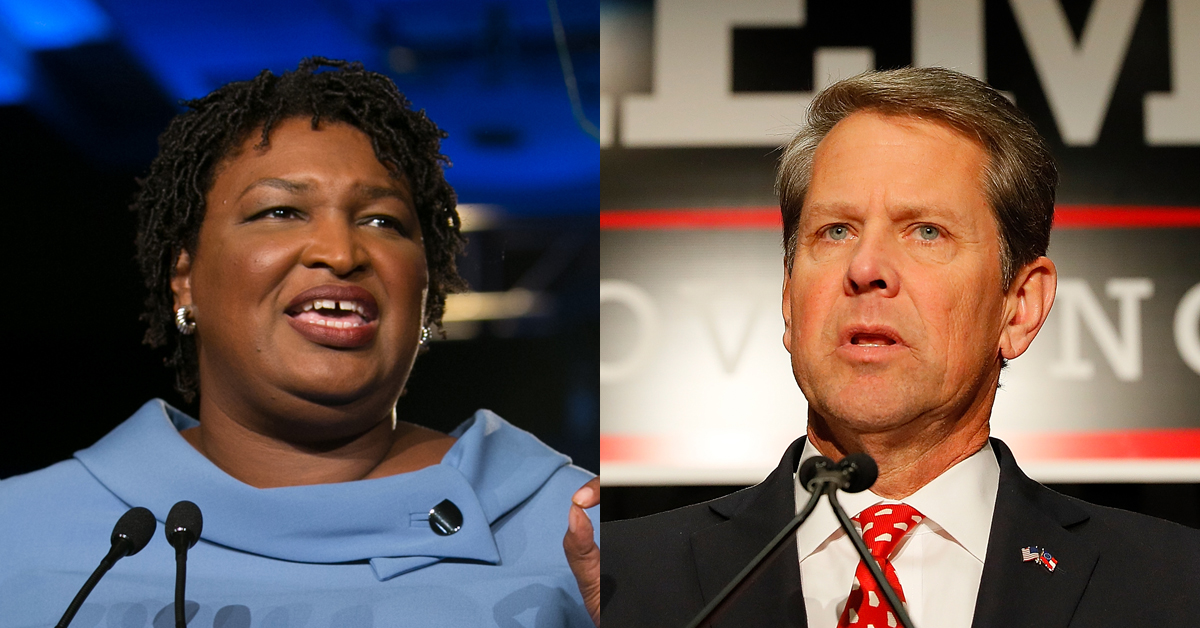

Evidently, Abrams and Kemp strongly differ on the various issues relating to the Georgian economy. Where Abrams believes in expanding medicaid, Kemp opposes it. Where Kemp plans to cap state spending, and cut regulations, Abrams plans to increase them. Where Abrams supports tax credits, Kemp opposes it. Ultimately, Abrams and Kemp's respective views do match their party's views. Democrats generally favor tax credits, medicaid expansion, and more economic regulations, whereas Republicans believe tax credits are wasteful, oppose medicaid expansion, and want to cap state spending. Ultimately, economic views were viewed to be a major factor in this election and Kemp's policies won him the election and the votes of the Georgian people.

Wednesday, December 19, 2018

The Case of Jamal Khashoggi - Navneet Pathak


In today's world, the media has a very strong influence over people who are insufficiently politically informed. With people who aren't informed enough politically, it is very easy for the media to paint a certain picture and be able to persuade those people. The media has always had a strong influence but in this century, they are able to highly influence votes with their own conducted public opinion polls and skewing them towards their biases.

Jamal Khashoggi

Today, I have chosen to take a closer look at 2 media sources and their opinions and views on the case of Jamal Khashoggi. CNN, one source, is leftist leaning whereas Breitbart, the other source, is conservative leaning as are each of their target audiences. The case of Jamal Khashoggi, in brief, is the case of an anti-Saudi establishment journalist who was confirmed killed in the Saudi embassy in Istanbul, Turkey on October 22, 2018.


In this op-ed article at cnn.com, the author Peter Bergen describes his past experiences with Jamal Khashoggi and how he views him as a person. This article was published October 22, 2018. This article is evidently liberally biased, with the second paragraph beginning by talking about Donald Trump supporters, claiming that they believe that "Khashoggi's killing matters less if he was aligned with the Muslim Brotherhood or once knew Osama bin Laden". This is portraying the president's supporters in a certain light with a lack of cite able evidence. Towards the end of the article, Bergen claims "Stewart and other Trump supporters who are hoping to smear a murdered journalist". Overall, the article is a summary of Khashoggi's interview in 2005, with Bergen's own opinions on Khashoggi with opinions on Trump and his supporters added in. Bergen's statement on Khashoggi is that he is "a journalist simply doing his job who evolved from an Islamist in his twenties to a more liberal position by the time he was in his forties." Since this article was written on October 22, it was directly in the heat of the murder of Jamal Khashoggi. Due to the aforementioned statements on Trump and his supporters, CNN's audience are likely to believe that those statements are true and use them in their own day to day arguments and also when formulating their own opinions.


In this article at breitbart.com, the author John Hayward discusses seven facts about Jamal Khashoggi and his career and life. In this article, Hayward claims that Khashoggi is a "Saudi national" and a "lawful resident of the U.S.". Hayward also states that Khashoggi had famous relatives in the Saudi elite. Throughout the article, Hayward continues to state various facts about Khashoggi, his life, and career.This article does contain a conservative bias as it does claim that "left-wingers are treating mentions of Khashoggi’s past with the Brotherhood as a 'smear' or “hate crime'" where "Khashoggi himself wrote in defense of the organization only a few months ago". Hawyard's article, like Bergen's does talk about the opposing political side and makes claims about what their supporters have said. Unlike Bergen's article on CNN, however, Hayward has evidence for these claims as he has 2 links to different sources, one of which being the Washington Post, the journalist site Khashoggi last wrote for, in order for Hayward to back up his claims. This article was written on October 18, 2018, being in the heat of the case of Jamal Khashoggi just like Bergen's article. This article may be able to influence its viewers better than Bergen's article as Hayward has evidence to back up his claims as well as simply containing facts in the article, which readers are much more likely to believe.


In conclusion, both articles had bias present in their articles, with Bergen's article lacking evidence and Hayward's article having it. Out of the 2 articles, I believe Breitbart to be more trustworthy as I trust news sites with citeable evidence and straight forward factual news the most. I personally get my news from Fox News as a conservative and I believe they present the most straight-forward news. When I want news from the opposing perspective I usually go to CNN because they do have a lot of op-ed articles for their perspective.