The Political Wireframe of America
Thursday, December 20, 2018
2018 Georgia Gubernatorial Election - Navneet Pathak
Hello all that have read my blog, this is my final post on this specific blog, keep an eye out for more blogs in the future. I define linkage institutions as a means for the public to voice their preferences on the development of public policy. I believe voting to be an integral and effective linkage institution as voting constitutes the foundation of our democracy, as democracy itself is based on the public voting to influence legislature. Voting enables the public to vote for what changes they want made in legislature. A certain party or candidate winning or losing an election can influence a voter's political beliefs as they could lose faith in that candidate or party if they lose or begin doing something the voter does not agree with. The election I have chosen to write about is the Georgia gubernatorial election that took place in 2018. This election was between 2 candidates, Stacey Abrams, the democrat-elect for governor, and Brian Kemp, the republican-elect for governor. State spending was considered a major factor in the 2018 Georgia gubernatorial election.
The first candidate in this election is Stacey Abrams. Stacey Abrams is the democrat-elect for the governor position in this election. The artifact from Abrams' website I will be exploring is this article that explores Abrams' views on the Georgian economy. Stacey Abrams' stance on the Georgian economy is that she will generate "thousands of long-term, good-paying jobs through small business capital programs, clean energy investment, and Medicaid expansion". Essentially what Abrams is stating is that she will expand medicaid, a stance which does align with the Democratic party, as well as focusing on clean energy and small business. Abrams also supports the Georgia Earned Income Tax Credit and the Cradle to Career Savings Program. Lastly, Abrams plans to "set a goal of 22,000 apprenticeships by 2022".
The second candidate in this election is Brian Kemp. Brian Kemp is the republican-elect for the governor position in this election. The artifact from Kemp's website I will be exploring is this article that explores Kemp's various stances and his priorities if he were to be elected governor of Georgia. Firstly, in Kemp's plan for small business, Kemp plans to "take a chainsaw to burdensome regulations" meaning that he plans to cut down on regulations on small businesses. Kemp wants to "work with business people - not bureaucrats" to cut small business regulations and "streamline state government". In order to reform state spending, Kemp plans to cap state spending, deliver "real tax" reform, and audit all tax breaks. Lastly, Kemp plans to expand opportunities in rural Georgia by improving their access to healthcare, internet, and economic development.
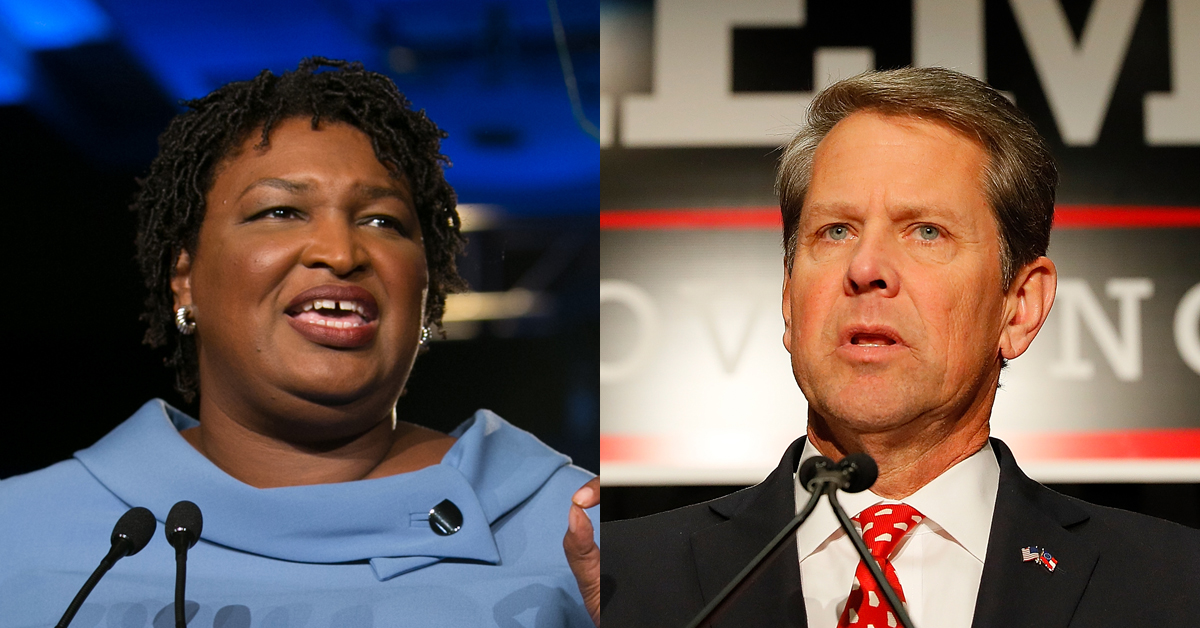
Evidently, Abrams and Kemp strongly differ on the various issues relating to the Georgian economy. Where Abrams believes in expanding medicaid, Kemp opposes it. Where Kemp plans to cap state spending, and cut regulations, Abrams plans to increase them. Where Abrams supports tax credits, Kemp opposes it. Ultimately, Abrams and Kemp's respective views do match their party's views. Democrats generally favor tax credits, medicaid expansion, and more economic regulations, whereas Republicans believe tax credits are wasteful, oppose medicaid expansion, and want to cap state spending. Ultimately, economic views were viewed to be a major factor in this election and Kemp's policies won him the election and the votes of the Georgian people.
Wednesday, December 19, 2018
The Case of Jamal Khashoggi - Navneet Pathak
![]() |
| Jamal Khashoggi |
Today, I have chosen to take a closer look at 2 media sources and their opinions and views on the case of Jamal Khashoggi. CNN, one source, is leftist leaning whereas Breitbart, the other source, is conservative leaning as are each of their target audiences. The case of Jamal Khashoggi, in brief, is the case of an anti-Saudi establishment journalist who was confirmed killed in the Saudi embassy in Istanbul, Turkey on October 22, 2018.
In this op-ed article at cnn.com, the author Peter Bergen describes his past experiences with Jamal Khashoggi and how he views him as a person. This article was published October 22, 2018. This article is evidently liberally biased, with the second paragraph beginning by talking about Donald Trump supporters, claiming that they believe that "Khashoggi's killing matters less if he was aligned with the Muslim Brotherhood or once knew Osama bin Laden". This is portraying the president's supporters in a certain light with a lack of cite able evidence. Towards the end of the article, Bergen claims "Stewart and other Trump supporters who are hoping to smear a murdered journalist". Overall, the article is a summary of Khashoggi's interview in 2005, with Bergen's own opinions on Khashoggi with opinions on Trump and his supporters added in. Bergen's statement on Khashoggi is that he is "a journalist simply doing his job who evolved from an Islamist in his twenties to a more liberal position by the time he was in his forties." Since this article was written on October 22, it was directly in the heat of the murder of Jamal Khashoggi. Due to the aforementioned statements on Trump and his supporters, CNN's audience are likely to believe that those statements are true and use them in their own day to day arguments and also when formulating their own opinions.
In this article at breitbart.com, the author John Hayward discusses seven facts about Jamal Khashoggi and his career and life. In this article, Hayward claims that Khashoggi is a "Saudi national" and a "lawful resident of the U.S.". Hayward also states that Khashoggi had famous relatives in the Saudi elite. Throughout the article, Hayward continues to state various facts about Khashoggi, his life, and career.This article does contain a conservative bias as it does claim that "left-wingers are treating mentions of Khashoggi’s past with the Brotherhood as a 'smear' or “hate crime'" where "Khashoggi himself wrote in defense of the organization only a few months ago". Hawyard's article, like Bergen's does talk about the opposing political side and makes claims about what their supporters have said. Unlike Bergen's article on CNN, however, Hayward has evidence for these claims as he has 2 links to different sources, one of which being the Washington Post, the journalist site Khashoggi last wrote for, in order for Hayward to back up his claims. This article was written on October 18, 2018, being in the heat of the case of Jamal Khashoggi just like Bergen's article. This article may be able to influence its viewers better than Bergen's article as Hayward has evidence to back up his claims as well as simply containing facts in the article, which readers are much more likely to believe.
In conclusion, both articles had bias present in their articles, with Bergen's article lacking evidence and Hayward's article having it. Out of the 2 articles, I believe Breitbart to be more trustworthy as I trust news sites with citeable evidence and straight forward factual news the most. I personally get my news from Fox News as a conservative and I believe they present the most straight-forward news. When I want news from the opposing perspective I usually go to CNN because they do have a lot of op-ed articles for their perspective.
Tuesday, October 30, 2018
Gun Control Perspectives - Navneet Pathak
The topic I have chosen to write about is gun control. This is a major issue that is widely discussed throughout the United States. Gun control in the United States is the set of laws that determine the regulation, possession, sale, use, etc. of guns in the United States. These laws vary from state to state. Our current President, Donald Trump, is anti-gun control, supports arming teachers, views shootings as a result of national mental health issues, and wants to appoint supreme court justices who respect the 2nd amendment.
The Coalition to Stop Gun Violence, otherwise known as the CSGV aims to support gun-control through "policy development, strategic engagement, and effective advocacy". "Drafting, passing, and implementing evidence-based legislation" is their number one priority as an interest group. A law that the CSGV are developing is "the Gun Violence Restraining Order (GVRO), a law that allows law enforcement and family members to temporarily remove firearms from a loved one in crisis” which they claim to have "worked with scientific experts to develop."
On their website, csgv.org, they released an article in which CSGV takes a specific stance against the NRA. In it, they describe the views of the NRA and President Trump as a “shared dangerous philosophy.”. When referring to the NRA and Trump, the CSGV “reject extremists who promote violence” as well as "an extremist hate group" with a "toxic ideology."
In this article, the CSGV fails to explain what issues they have with the NRA and Trump’s policies. They use negative rhetoric such as “extremists” to refer to the NRA and Trump and their philosophy as “dangerous”. This article takes a clear liberal stance.
The National Rifle Association, more commonly known as the NRA, has stated their mission is "preserving the core of our American values and traditions in our steadfast effort to Teach Freedom." The NRA aims to defend their right to the 2nd amendment as they raise "tax-deductible contributions in support of a wide range of firearm-related public interest activities of the National Rifle Association of America." Their aim as an interest group can be summed up as: "to promote firearms and hunting safety, to enhance marksmanship skills of those participating in the shooting sports, and to educate the general public about firearms in their historic, technological and artistic context."
On a section of their website, nraila.org, NRA posted an article in which they take a stance against gun confiscation and gun control. They also take a stance against CNN, a major liberal news network saying that they have “a difficult time telling the truth” and that they “can’t seem to help but fabricate a story.”
“In 2008, NRA secured a settlement with the city to return hundreds of firearms to their owners.” The NRA takes a clear stance on anti-gun control with this statement by informing readers that they worked towards anti-gun control in New Orleans. In this article, the NRA takes a clear conservative and anti-gun control stance. It does look into the perspective of the other side, including multiple quotes in the CNN pro-gun control article which the NRA they discuss throughout the article. However, the article fails to address and go into depth about what issues they had with the laws and policies of various Democratic lawmakers. They use negative rhetoric such as "fake news" to describe CNN's Chris Cillizza's article as well as "fabricate" to describe CNN's articles in general.
Where the CSGV is pro-gun control, the NRA is anti-gun control. Both are very popular gun control interest groups for their respective sides. Both articles are evidently biased with negative rhetoric towards the opposing perspective. I personally resonate with the NRA more. Their article is much more thorough in describing their perspective than the CSGV article, which didn't do much to explain their side. I am anti-gun control as I support the Constitution's 2nd amendment, which guarantees the individual their right to bear arms (possess a gun).
Thursday, October 25, 2018
The Influence of Political Parties in America - Navneet Pathak
Political parties - two words many fail to recognize the importance of in the political world of today, tomorrow, and yesterday. What I mean by this of course is political parties have always been an essential and important part of our history. They represent our views and make our voices heard; they make sure our views transform into law. Without political parties, America's political elections would be a mess. Imagine there being hundreds of independent candidates that, if you wish to find more information on their views, you would have to research every single one. With political parties, you can narrow your candidates to a specific party and start your research from there. Political parties bring views otherwise unheard of to the national stage.
The party I choose to write about is the Republican Party, otherwise known as the GOP. As previously stated in my first post, my parents are liberal Democrats and are immigrants from India so I was raised to be a Democrat. I had never paid much attention to politics so I never did my own research. However, around the 2016 election and after doing my own research I discovered many of my views aligned with the candidates of the GOP party which surprised me at first. I believe this party represents my views best compared to other parties. The Republican party believes in smaller federal, state, and local governments. They also believe in lower taxes, are against medicare/Obamacare, oppose environmental regulation, in military expansion, and believe that America should be energy independent. The GOP is one of 2 major parties in the US, the other being the Democratic party. The Democrats are primarily liberal, whereas Republicans are primarily conservative.
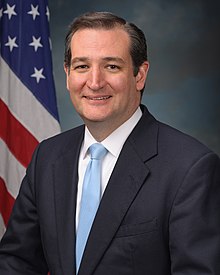
This blog post from cruz.senate.org was posted on October 13, 2018. The blog posts are a place for people to gain insight on the views of Republican Texan senator Ted Cruz. In this blog post, Ted Cruz explains his view that Medicare part A has wrongly been connected to Social Security. He also states that senior citizens should have the ability to choose a health insurance plan that works for them without losing their Social Security benefits. He also believes tax cuts should be permanent, federal judges should be constitutionalists, and that the military needs to continue to expand.
These views expressed in TED Cruz's post evidently align with Republican views in that Ted Cruz supports military expansion, permanent tax cuts, constitutionalist judges, and opposes medicare. Ted Cruz is a prominent senator who has gained national coverage on his views so this post could influence the views of someone reading it.
Ted Cruz is a Republican Texan senator. He ran for Republican nomination for President in the 2016 elections. As Solicitor General for the State of Texas and in private practice, Ted authored more than 80 U.S. Supreme Court briefs and argued 43 oral arguments, including nine before the U.S. Supreme Court. He also won an unprecedented series of landmark national victories that include his defense of U.S. sovereignty against the UN and the World Court in Medellin v. Texas, our Second Amendment right to keep and bear arms, the constitutionality of the Ten Commandments monument at the Texas State Capitol, and the words “under God” in the Pledge of Allegiance.
The party I choose to write about is the Republican Party, otherwise known as the GOP. As previously stated in my first post, my parents are liberal Democrats and are immigrants from India so I was raised to be a Democrat. I had never paid much attention to politics so I never did my own research. However, around the 2016 election and after doing my own research I discovered many of my views aligned with the candidates of the GOP party which surprised me at first. I believe this party represents my views best compared to other parties. The Republican party believes in smaller federal, state, and local governments. They also believe in lower taxes, are against medicare/Obamacare, oppose environmental regulation, in military expansion, and believe that America should be energy independent. The GOP is one of 2 major parties in the US, the other being the Democratic party. The Democrats are primarily liberal, whereas Republicans are primarily conservative.
This blog post from cruz.senate.org was posted on October 13, 2018. The blog posts are a place for people to gain insight on the views of Republican Texan senator Ted Cruz. In this blog post, Ted Cruz explains his view that Medicare part A has wrongly been connected to Social Security. He also states that senior citizens should have the ability to choose a health insurance plan that works for them without losing their Social Security benefits. He also believes tax cuts should be permanent, federal judges should be constitutionalists, and that the military needs to continue to expand.
These views expressed in TED Cruz's post evidently align with Republican views in that Ted Cruz supports military expansion, permanent tax cuts, constitutionalist judges, and opposes medicare. Ted Cruz is a prominent senator who has gained national coverage on his views so this post could influence the views of someone reading it.
Ted Cruz is a Republican Texan senator. He ran for Republican nomination for President in the 2016 elections. As Solicitor General for the State of Texas and in private practice, Ted authored more than 80 U.S. Supreme Court briefs and argued 43 oral arguments, including nine before the U.S. Supreme Court. He also won an unprecedented series of landmark national victories that include his defense of U.S. sovereignty against the UN and the World Court in Medellin v. Texas, our Second Amendment right to keep and bear arms, the constitutionality of the Ten Commandments monument at the Texas State Capitol, and the words “under God” in the Pledge of Allegiance.
Tuesday, October 16, 2018
Political Typology - Navneet Pathak
Hello, my name is Navneet and I'm a senior high school student at Summit Rainer. This blog will be a space to give my insights into the political wireframe of America and my views. It will be a place for my peers to gain another perspective on politics. In this post, I will be discussing my political typology and political beliefs.
Some background on my political beliefs; My parents are immigrants from India and are both liberals in terms of political typology. As a result, I was raised to be a democratic liberal for most of my early life. Around the beginning of the 2016 election, in around 2015, I finally began to address the topic of politics and began to do my own research on my own views. I was surprised to find many of my own views actually aligned with many of the republican candidates and I started to lean conservative.
My political typology is core conservative. In regards to government, I believe in smaller government. I believe this because I think government regulates too many sectors of the economy and society. My beliefs are based on research and informing myself.
Most core conservatives believe in smaller government, lower taxes, are skeptics of the social safety net, and are divided on whether immigrants help or burden the country. They are also positive towards the current state of America and believe it stands above other countries of the world. I agree and align with all these viewpoints. The one major way I differ from my fellow core conservatives is I support environmental regulation. In regards to immigration however, I believe legal immigrants do help this country, whereas I am against and fully oppose illegal immigration.
Some background on my political beliefs; My parents are immigrants from India and are both liberals in terms of political typology. As a result, I was raised to be a democratic liberal for most of my early life. Around the beginning of the 2016 election, in around 2015, I finally began to address the topic of politics and began to do my own research on my own views. I was surprised to find many of my own views actually aligned with many of the republican candidates and I started to lean conservative.
My political typology is core conservative. In regards to government, I believe in smaller government. I believe this because I think government regulates too many sectors of the economy and society. My beliefs are based on research and informing myself.
Most core conservatives believe in smaller government, lower taxes, are skeptics of the social safety net, and are divided on whether immigrants help or burden the country. They are also positive towards the current state of America and believe it stands above other countries of the world. I agree and align with all these viewpoints. The one major way I differ from my fellow core conservatives is I support environmental regulation. In regards to immigration however, I believe legal immigrants do help this country, whereas I am against and fully oppose illegal immigration.
Subscribe to:
Comments (Atom)